Category: heart rate

Almost one year since the last post, lots happened

It is amazing how time flies. I just realised that it is almost one year since my last post. Time has gone so fast, it is incredible. It seems yesterday that we were celebrating the end of the Qatar 2022 World Cup, 2023 came and went incredibly quickly.

Work has been manic as always. A lot of exciting projects conducted, new services added to the hospital and many projects completed and published.

Below a list of papers published in 2023. All work hopefully contributing to advance knowledge in the field. Very importantly, 3 key papers from our services during the FIFA World Cup. For the first time in history one hospital delivered all services to athletes and delegations during a Football World Cup and we have published the data to help future events planning. The papers are all open access, so just click on the links and download/read them.

Management of radiology services during the 2022 FIFA football (soccer) World Cup.

Bordalo M, Evans T, Allenjawi S, Targett S, Dzendrowskyj P, Al-Kuwari AJ, Cardinale M, D’Hooghe P.Skeletal Radiol. 2023 Nov 9. doi: 10.1007/s00256-023-04486-2. Online ahead of print.PMID: 37943308 Review.3CiteShare 

Medical services at the FIFA world cup Qatar 2022.

Schumacher YO, Kings D, Whiteley R, Dharman A, Taqtaq G, Mc Court P, Alkhelaifi K, Targett S, Holtzhausen L, Pieles GE, Dzendrowskyj P, Zikria BA, Bordalo M, Al Hussein I, D’Hooghe P, Al-Kuwari A, Cardinale M.Br J Sports Med. 2023 Oct 27:bjsports-2023-106855. doi: 10.1136/bjsports-2023-106855. Online ahead of print.PMID: 37890964 Free article.4CiteShare 

Imaging-detected sports injuries and imaging-guided interventions in athletes during the 2022 FIFA football (soccer) World Cup.

Bordalo M, Serner A, Yamashiro E, Al-Musa E, Djadoun MA, Al-Khelaifi K, Schumacher YO, Al-Kuwari AJ, Massey A, D’Hooghe P, Cardinale M.Skeletal Radiol. 2023 Sep 16. doi: 10.1007/s00256-023-04451-z. Online ahead of print.PMID: 377158195CiteShare 

Junior to senior transition pathway in Italian Football: The rocky road to the top is not determined by youth national team’s selections.

Boccia G, Brustio PR, Rinaldi R, Romagnoli R, Cardinale M, Piacentini MF.PLoS One. 2023 Jul 18;18(7):e0288594. doi: 10.1371/journal.pone.0288594. eCollection 2023.PMID: 37463153 Free PMC article.6CiteShare 

Thermoregulatory responses during road races in hot-humid conditions at the 2019 Athletics World Championships.

Aylwin P, Havenith G, Cardinale M, Lloyd A, Ihsan M, Taylor L, Adami PE, Alhammoud M, Alonso JM, Bouscaren N, Buitrago S, Esh C, Gomez-Ezeiza J, Garrandes F, Labidi M, Lange G, Moussay S, Mtibaa K, Townsend N, Wilson M, Bermon S, Racinais S.J Appl Physiol (1985). 2023 May 1;134(5):1300-1311. doi: 10.1152/japplphysiol.00348.2022. Epub 2023 Apr 6.PMID: 37022963 Free PMC article.7CiteShare 

Infographic. Oxford consensus on primary cam morphology and femoroacetabular impingement syndrome-natural history of primary cam morphology to inform clinical practice and research priorities on conditions affecting the young person’s hip.

Dijkstra HP, Mc Auliffe S, Ardern CL, Kemp JL, Mosler AB, Price A, Blazey P, Richards D, Farooq A, Serner A, McNally E, Mascarenhas V, Willy RW, Stankovic I, Oke JL, Khan KM, Glyn-Jones S, Clarke M, Greenhalgh T; Young Athlete’s Hip Research (YAHiR) Collaborative.Br J Sports Med. 2023 Mar;57(6):382-384. doi: 10.1136/bjsports-2022-106094. Epub 2023 Jan 17.PMID: 36650034 Free PMC article. No abstract available.8CiteShare 

Oxford consensus on primary cam morphology and femoroacetabular impingement syndrome: part 2-research priorities on conditions affecting the young person’s hip.

Dijkstra HP, Mc Auliffe S, Ardern CL, Kemp JL, Mosler AB, Price A, Blazey P, Richards D, Farooq A, Serner A, McNally E, Mascarenhas V, Willy RW, Oke JL, Khan KM, Glyn-Jones S, Clarke M, Greenhalgh T; Young Athlete’s Hip Research (YAHiR) Collaborative.Br J Sports Med. 2022 Dec 6;57(6):342-58. doi: 10.1136/bjsports-2022-106092. Online ahead of print.PMID: 36588402 Free PMC article.9CiteShare 

Oxford consensus on primary cam morphology and femoroacetabular impingement syndrome: part 1-definitions, terminology, taxonomy and imaging outcomes.

Dijkstra HP, Mc Auliffe S, Ardern CL, Kemp JL, Mosler AB, Price A, Blazey P, Richards D, Farooq A, Serner A, McNally E, Mascarenhas V, Willy RW, Oke JL, Khan KM, Glyn-Jones S, Clarke M, Greenhalgh T; Young Athlete’s Hip Research (YAHiR) Collaborative.Br J Sports Med. 2022 Dec 6;57(6):325-41. doi: 10.1136/bjsports-2022-106085. Online ahead of print.

We also delivered an incredible amount of educational activities and contributed to national and international conferences. As usual, many of our educational offerings are available on your youtube channel. I had the chance to travel to South Africa for the annual meeting of the IOC research centres and contribute to further discussion and advancements on injury and illness prevention in Sport. It is always great to be part of such an incredible community trying to advance the knowledge in this field. Hopefully 2024 will see more collaborative projects between our institutions.

This year I also joined the Wellness Foundation as a member of the scientific advisory board. This is a project I am very passionate about, as the mission of the organisation is to encourage the wellness culture, contribute to the education of practitioners and individuals involved in delivering exercise as an intervention to improve people’s health and hopefully develop research projects to advance knowledge and increase the uptake of exercise in various communities. We had a great event in Italy at the Technogym HQ, the 25th wellness congress which attracted may GPs and operators in the wellness world. The details of the event are here. Few weeks later, the Wellness Foundation also launched the publication ‘Exercise is Medicine’. The new edition was released by the Wellness Foundation, with the support of Technogym, global partner of Exercise is Medicine – an initiative of the American College of Sports Medicine, and was supported by THiNKactiveEuropeActive‘s research center, and the Research Centre for Sport Sciences department of King Juan Carlos University. Hopefully this publication will reach many GPs and more patients will be prescribed wih exercise to improve their health.

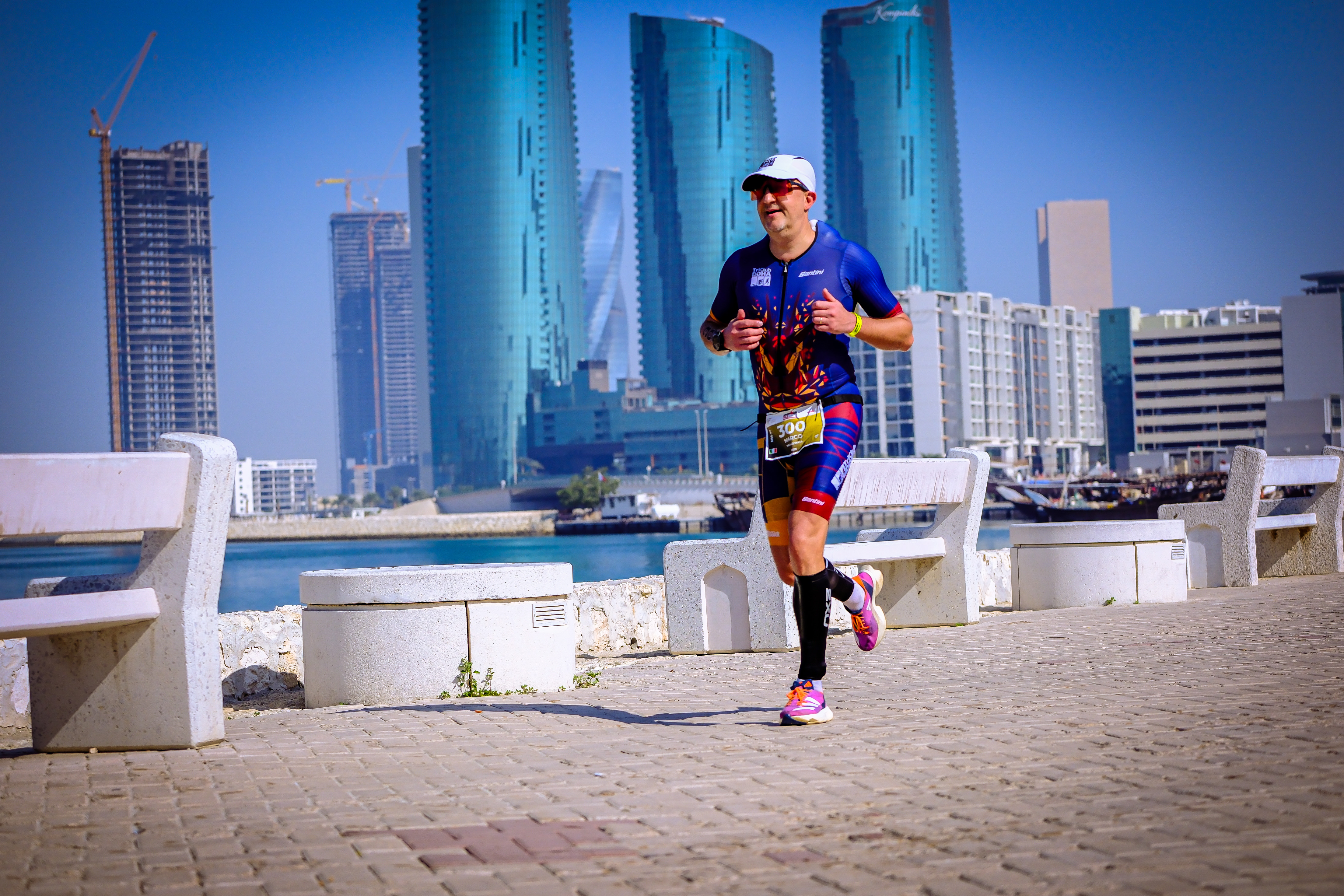
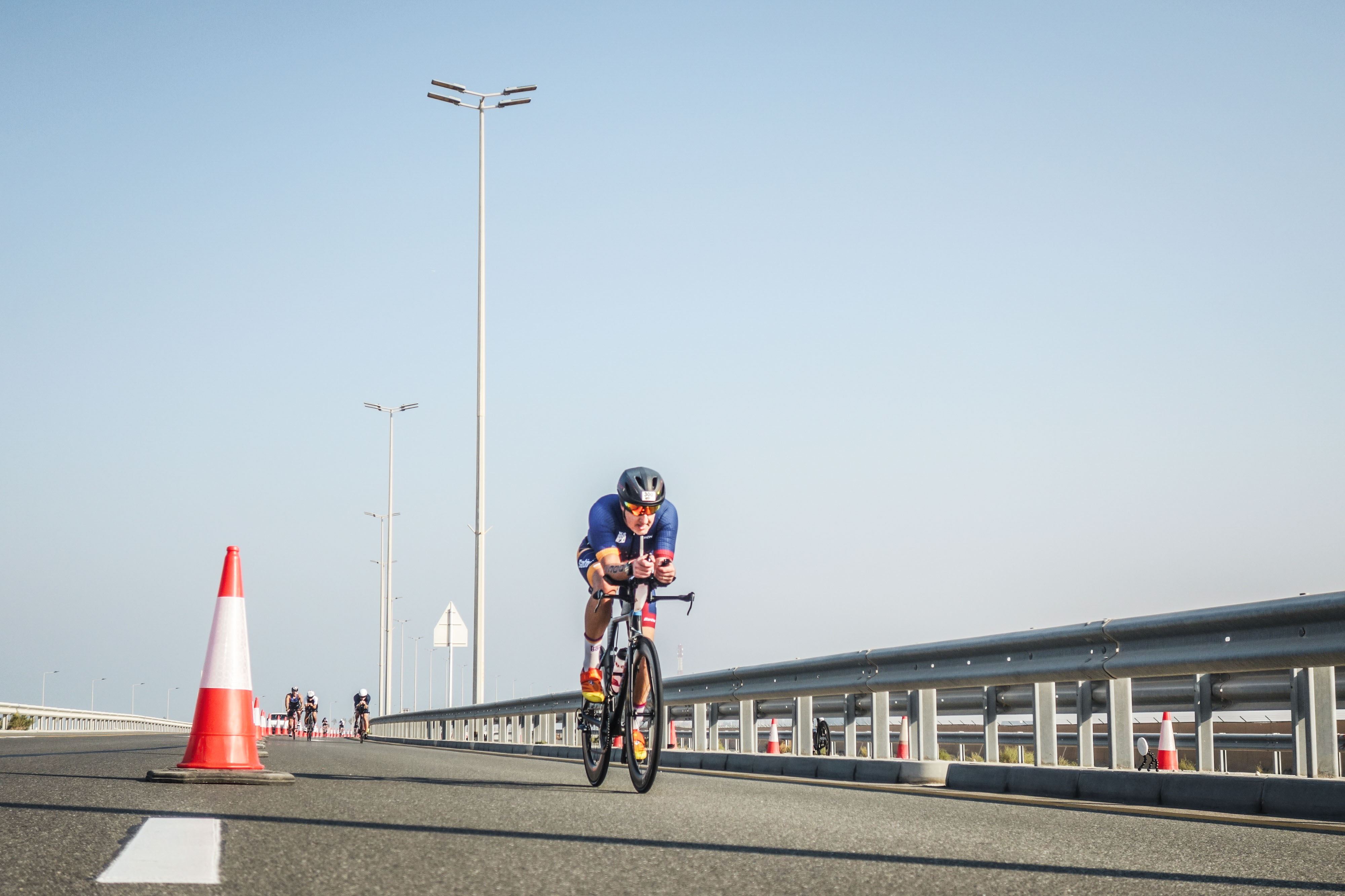
Despite the work and life challenges, I continued training for triathlons and finally managed to compete in a 70.3 Ironman. The race I was signed up for as a 50th birthday present from my wife was in Bahrain in December. I had a few hiccups training for it due to health and logistics challenges and also a calf strain 13 days before competition. However, I managed to complete the race with an excellent 5h 48min and 17s (for my standards and my injury situation) and enjoyed the course greatly. Swimming in the Reef Island for 1.9km, followed by an iconic 90Km Bike Ride seeing the Bahrain World Trade Center and riding in the F1 circuit, to then finish with 21km run in Reef Island. Hopefully health will still be on my side next year and I hope to do more events with shorter distances and possibly another 70.3 somewhere else in the World.
Monitoring training load: quo vadis? #2

After having presented a simple method to monitor training load without the need of expensive equipment, it is now the time to discuss other methods which involve the use of equipment.

The first and obvious one is monitoring training with the use of heart rate monitors. Thanks to the development of technology it is nowadays possible to measure in real time heart rate (HR) of numerous players on the field without the need for them to wear a watch or a recording device. Many companies in fact provide telemetry systems capable of storing and transmitting heart rate values recorded during training and/or competition. When I first started working in this field may years ago I remember the excitement of being able to measure HR during training and be able to download the files for analysis using the conventional heart rate bands and watches. The cost was prohibitive (there was no way I could afford 20 watches + HR bands!), it took ages to download the files with 1 interface connected to a serial port, and most of all, because athletes needed to wear a watch…we had to be creative about where to place it and also be prepared to sacrifice a few in some contact sports or due to falls.

Nowadays, it is very easy! The current systems can transmit information in real time, it is possible to measure many athletes at the same time and it is possible to store and analyse all data immediately after the end of each training session. Furthermore, due to the improved quality of the sensors used and the software and hardware developments, it is also possible to measure R-R intervals and analyse heart rate variability (HRV).


image

Heart rate can be considered as a reliable indicator of the physiological load both for immediate training monitoring and for post-training analysis in almost every sport. However, considering the influence of psychological components like anxiety and stress on HR, it is feasible to suggest that an appropriate assessment of training intensity should also consider this limitation of HR monitoring.

Typical training plans of team sports are characterised by a combination of technical and tactical specific drills, small sided games, or general types of team drills. In the above situations, all members or small groups of the team perform similar tasks. The determination of training intensity and training stress is an extremely important parameter for training planning and for appropriate distribution of training load in elite athletes competing in team sports.

The following methods have been suggested to be effective in quantifying the training load:

The Training Impulse [TRIMP] method

Proposed by Bannister et al. (1975), characterised by the following equation:

TRIMP = training time (minutes) x average heart rate (bpm).

For example, 30 minutes at 145 bpm. TRIMP = 30 x 145 = 4350

This approach is very simple, however it does not distinguish between different levels of training. So it has been used mainly to determine general load in aerobic-endurance sessions.

TRIMP TRAINING ZONES METHOD

Developed by Foster et al (2001)  is based on assigning a coefficient of intensity to five HR zones expressed as a % of HRmax:

1. 50-60% HRmax

2. 60-70% HRmax

3. 70-80% HRmax

4. 80-90% HRmax

5. 90-100% HRmax

The zone number is used to quantify training intensity; TRIMP is calculated as the cumulative total of time spent in each training zone.

For example

  • 30 minutes at 140 bpm. Max HR = 185 bpm. %max HR = 140/185 x 100 = 76%. Therefore, training intensity = 3.

TRIMP = training volume (time) x training intensity (HR zone) = 30 x 3 = 90.

  • 25 minutes at 180 bpm. Max HR = 185 bpm. %max HR = 97%.

Training intensity = 5. TRIMP = 25 x 5 = 125

The zone TRIMP calculation method can distinguish between training levels while remaining mathematically simple, however this can only quantify aerobic training and it does not allow quantification of strength, speed, anaerobic and technical sessions.

TRIMP Zones + RPE

Combining the two methods allows the determination of training intensity not only from a cardiovascular standpoint, but also taking into account the perception of effort and can be extended to strength training to be able to collect a cumulative training load score.

EPOC (excess post-exercise oxygen consumption) Methods

EPOC is basically the excess oxygen consumed during recovery from exercise as compared to resting oxygen consumption. The EPOC prediction method has been developed to provide a physiology-based measure for training load assessment.

EPOC is predicted only on the basis of heart rate derived information. The variables used in the estimation are current intensity (%VO2max) and duration of exercise (time between two sampling points, Dt) and EPOC in the previous sampling point. The model is able to predict the amount of EPOC at any given moment. No post-exercise measurement is needed. The model can be mathematically described as follows:

EPOC (t) = f(EPOC(t-1), exercise_intensity(t), Dt) (Saalasti, 2003)

At low exercise intensity (<30-40%VO2max), EPOC does not accumulate significantly after the initial increase at the beginning of exercise. At higher exercise intensities (>50%VO2max), EPOC accumulates continuously. The slope of accumulation gets steeper with increasing intensity.

(The following figure is from Firstbeat Technologies Withepaper)image

The relationship between measured and HR derived EPOC has been shown to be significantly large suggesting this method as an alternative solution to determine training load with minimally invasive procedures such as wearing a chest band (Rusko et al., 2003).

image

And by the same authors has been shown to be related to blood lactate.

image

The EPOC approach has been nowadays introduced by various HR monitors manufacturers (www.suunto.com and www.firstbeattechnologies.com).

(Figure above from www.suunto.com)

Various manufacturers are now developing innovative approaches to describe training loads based on HR measurements (e.g. http://www.polar.fi/en/b2b_products/team_sports/software/polar_team2_software) and more will be available soon due to the ability for the current systems to record with high accuracy also R-R intervals and derive training stress information from Heart Rate Variability indices.

I will write more on these in the next posts on this interesting topic…this is it for now…stay tuned!