Category: Sports Science

New systematic review and meta-analysis

I realised I have not written much on this blog since our activities started at Aspire Academy. This is clearly a sign that we have been very busy at work but also that the only time I had to write it has been spent writing scientific work. As a department we are doing very well not only because our service provision improves on a daily basis but also because we are starting to produce a lot of applied scientific papers which I hope can help the coaching and sports science community Worldwide in improving the support to athletes. We have quite a good number of articles already published, a few in press and many submitted which means that by the end of 2015 we might be able to make a significant contribution to our willingness to learn more and share the learning.

The most recent effort is an extensive systematic review and meta-analysis on the topic of cold baths in adolescent athletes. This was triggered by the fact that many coaches and sports scientists working with young athletes tend to replicate processes and procedures observed in senior athletes without questioning appropriateness and effectiveness. Our conclusions are pretty clear: there is no evidence of benefits of such interventions in adolescent athletes and there are a lot of unanswered questions when it comes to the implications for such recovery practice to negatively affect training adaptations. So as usual, there is a need for more and better studies to understand this with all the limitations of conducting studies in a youth population.

The article is free and completely accessible online. The abstract is below.
If you are interested in reading it, just click here and download the PDF.

Abstract

Recovery and regeneration modalities have been developed empirically over the years to help and support training programmes aimed at maximizing athletic performance. Professional athletes undergo numerous training sessions, characterized by differing modalities of varying volumes and intensities, with the aim of physiological adaptation leading to improved performance. Scientific support to athletes focuses on improving the chances of a training programme producing the largest adaptive response. In competition it is mainly targeted at maximizing the chances of optimal performance and recovery when high performance levels are required repeatedly in quick succession (e.g. heats/finals). In recent years, a lot of emphasis has been put on recovery modalities. In particular, emphasis has been placed on the need to reduce the delayed onset of muscle soreness (DOMS) typically evident following training and competitive activities inducing a certain degree of muscle damage. One of the most used recovery modalities consists of cold-water immersion and/or ice/cold applications to muscles affected by DOMS. While the scientific literature has provided a rationale for such modalities to reduce pain in athletes and recreationally active adults, it is doubtful if this rationale is appropriate to aid training with adolescent athletes. In particular, since these methods have been suggested to potentially impair the muscle remodeling process leading to muscle hypertrophy. While this debate is still active in the literature, many coaches adopt such practices in youth populations, simply transferring what they see in elite sportspeople directly; without questioning the rationale, safety or effectiveness as well as the potential for such activity to reduce the adaptive potential of skeletal muscle remodeling in adolescent athletes. The aim of this review was to assess the current knowledge base on the use of ice/cold applications for recovery purposes in adolescent athletes in order to provide useful guidelines for sports scientists, medical practitioners, physiotherapists and coaches working with such populations as well as developing research questions for further research activities in this area. Based on the current evidence, it seems clear that evidence for acute benefits of such interventions are scarce and more work is needed to ascertain the physiological implications on a pre or peri-pubertal population.
Keywords: 

Recovery; Ice; Cold; Youth; Adolescent; Athlete; Elite

New season new activities

So, here we are again, after the summer break the new sporting season is about to start in Doha. The development of activities at Aspire academy is now moving faster than ever. We are starting an exciting project with the Qatar Athletics Federation to work closely together to develop talents as well as establish a sustainable structure to integrate coaching, science and medicine. Since September all QAF athletes and coaches will be training at Aspire and we will be working together to realize this vision and be ready for Doha 2019 and beyond. This project really excites me as I can see this being a true legacy project for the state of Qatar and I am proud to be part of it. We are also contributing to the international community with a conference, which has now become an annual event. In fact, after the success of last year’s conference we have organized another event on coaching young athletes with some excellent speakers and are looking forward to welcome all our coaches, and many coaches from around the World to attend as well. The details of the conference are available here. It is a very exciting time for the academy as two of our former students are participating in the World Championships in Beijing and one of them can hopefully bring home a medal (fingers crossed Mutaz and coach Stan!).


Our service delivery to Aspire athletes and coaches keeps improving and we are introducing more detailed monitoring and reporting activities to be able to influence practice and document the coaching approaches being used in our sports. The centralized database has now been implemented and more minimally invasive and wearable technologies  are being developed and deployed to understand more about coaching young athletes. Our applied research activities are continuing and we plan to submit more papers to describe our work as well as challenge current practice on young athletes. I promise to use to blog to keep everyone up to date as well as working with Aspire to communicate through our social media/website channels a bit more about the activities we conduct.

On the science front, we have also decided to make sure we have an annual scientific conference after the success of the Talent ID one we organized last year. This year our focus is on training monitoring and we have some amazing speakers confirmed as well as a great-exciting programme. The conference is completely free and all details are available here.

This is a great opportunity to learn and network as well as a excellent chance to come to visit us, see our wonderful facilities and possibly talk about collaborations and/or bringing your athletes in Doha for training camps.

So, as you can probably gather from my writing, I am looking forward to this sporting season and I hope to meet/see many of you in Doha at one of our events and/or at one of the many international competitions hosted by the state of Qatar.

Money making conferences and speaking invitations

I am getting increasingly annoyed by some invitations I received to speak at conferences. Over the years I have been fortunate enough to be invited in more than 20 countries to talk about my research/my experience/my work in a variety of settings. I gave talks in scientific conferences of big organisations like the American College of Sports Medicine or the European College of Sports Science. I spoke at coaching clinics organised by Olympic Committees, National Federations, Coaching organisations. Finally I spoke at industry events, or educational events for coaches/sports scientists. For me receiving an invite is a great honour and a big responsibility. I feel proud of the recognition and some time apprehensive about the task. However I tend to accept most of the requests provided I have also an opportunity to learn something and/or matches the requirements of my employer. Every time I have been somewhere to speak, I have always learnt something new and/or made new connections/friends and these have always led to some exchange of information/experiences/ideas which is great. Thanks to this, I have been in so many places I would have never been to, met some amazing people, learnt great things, tried new food and drinks, discovered new cultures/ways of living, seen incredible facilities and sceneries.
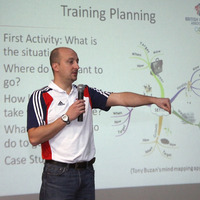
(This is me speaking in Campinas in Brazil few years ago. 
Great conference, met so many great people and had a brilliant experience)

However recently I keep getting invites from organisations/companies organising conferences to make money. Organisations which charge a fortune to attendees. And they first send an invite to be a keynote speaker and then they pretend I should pay for the pleasure of speaking at their conference.
I am sure I am not alone in this. Recently, speaking to other colleagues this seems to be happening more and more to many. This has to stop, and the only way to do it is for people to say: “No, I am not coming. If you want me to speak at your event/conference you will have to pay for the costs (travel/accommodation/etc)”.
Let me make this clear. I am not talking about invitations to speak at a conference of respected scientific societies of which many of us are members. In such events you go to share latest findings or discuss your research between peers (albeit I still think even in such cases travel grants should be provided). I am talking about clinics and conferences which charge attendees large sums. In that case you are going there to educate the attendees and teach (hopefully) something or share your knowledge and experience. Travelling costs money and time. So anybody invited to speak at a conference should have at least their costs covered.

But I am pushing it a bit more. Preparing a lecture or a workshop requires time and effort, travelling to and from the conference requires time and effort, acquiring knowledge requires time and effort, delivering the content requires time and effort. Why such time and effort should not be rewarded?

Former athletes/celebrities/CEOs/politicians charge very large sums for a dinner speech. Speeches which are an account of their experiences and accomplishments. A way to transmit knowledge and experience. I have been in many of these speeches, some exciting and well prepared-rehearsed with great material to show, some absolutely plain boring with not a single picture/video/presentation in sight. All well rewarded and for sure, with the travel costs covered. All well deserved.

But if this is the case, why sports scientists should accept to be invited to speak at an event, make the event (you can’t sell a conference without speakers…can you?) and be asked to pay for the pleasure, while the organiser makes cash? A recent invite came form a conference charging participants  somewhere around 1000 USD each. Apparently typical numbers are around the 200 mark. So, once the organisers have paid the conference venue and few coffees and biscuits, how much are they making? You do the math. It would be great to have some views on this. I think that people’s time is precious and should always be rewarded and it’s up to each individual to decide if they want to “donate” their time to any cause (speaking to conferences included as I have done many times). Preparing a talk requires time and effort. It’s a job, so to me it should be considered work.

This issue seems to be typical in other fields as well (see a great blog here).

So that’s it, you know it now. If you want me to talk at your event, make sure you can cover at least the travel costs. If not, don’t bother to email me, as from now on the replies will not be polite.