
Money making conferences and speaking invitations

I am getting increasingly annoyed by some invitations I received to speak at conferences. Over the years I have been fortunate enough to be invited in more than 20 countries to talk about my research/my experience/my work in a variety of settings. I gave talks in scientific conferences of big organisations like the American College of Sports Medicine or the European College of Sports Science. I spoke at coaching clinics organised by Olympic Committees, National Federations, Coaching organisations. Finally I spoke at industry events, or educational events for coaches/sports scientists. For me receiving an invite is a great honour and a big responsibility. I feel proud of the recognition and some time apprehensive about the task. However I tend to accept most of the requests provided I have also an opportunity to learn something and/or matches the requirements of my employer. Every time I have been somewhere to speak, I have always learnt something new and/or made new connections/friends and these have always led to some exchange of information/experiences/ideas which is great. Thanks to this, I have been in so many places I would have never been to, met some amazing people, learnt great things, tried new food and drinks, discovered new cultures/ways of living, seen incredible facilities and sceneries.

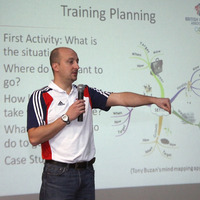
(This is me speaking in Campinas in Brazil few years ago. 
Great conference, met so many great people and had a brilliant experience)

However recently I keep getting invites from organisations/companies organising conferences to make money. Organisations which charge a fortune to attendees. And they first send an invite to be a keynote speaker and then they pretend I should pay for the pleasure of speaking at their conference.
I am sure I am not alone in this. Recently, speaking to other colleagues this seems to be happening more and more to many. This has to stop, and the only way to do it is for people to say: “No, I am not coming. If you want me to speak at your event/conference you will have to pay for the costs (travel/accommodation/etc)”.
Let me make this clear. I am not talking about invitations to speak at a conference of respected scientific societies of which many of us are members. In such events you go to share latest findings or discuss your research between peers (albeit I still think even in such cases travel grants should be provided). I am talking about clinics and conferences which charge attendees large sums. In that case you are going there to educate the attendees and teach (hopefully) something or share your knowledge and experience. Travelling costs money and time. So anybody invited to speak at a conference should have at least their costs covered.

But I am pushing it a bit more. Preparing a lecture or a workshop requires time and effort, travelling to and from the conference requires time and effort, acquiring knowledge requires time and effort, delivering the content requires time and effort. Why such time and effort should not be rewarded?

Former athletes/celebrities/CEOs/politicians charge very large sums for a dinner speech. Speeches which are an account of their experiences and accomplishments. A way to transmit knowledge and experience. I have been in many of these speeches, some exciting and well prepared-rehearsed with great material to show, some absolutely plain boring with not a single picture/video/presentation in sight. All well rewarded and for sure, with the travel costs covered. All well deserved.

But if this is the case, why sports scientists should accept to be invited to speak at an event, make the event (you can’t sell a conference without speakers…can you?) and be asked to pay for the pleasure, while the organiser makes cash? A recent invite came form a conference charging participants  somewhere around 1000 USD each. Apparently typical numbers are around the 200 mark. So, once the organisers have paid the conference venue and few coffees and biscuits, how much are they making? You do the math. It would be great to have some views on this. I think that people’s time is precious and should always be rewarded and it’s up to each individual to decide if they want to “donate” their time to any cause (speaking to conferences included as I have done many times). Preparing a talk requires time and effort. It’s a job, so to me it should be considered work.

This issue seems to be typical in other fields as well (see a great blog here).

So that’s it, you know it now. If you want me to talk at your event, make sure you can cover at least the travel costs. If not, don’t bother to email me, as from now on the replies will not be polite.
Athletics Coaches Survey

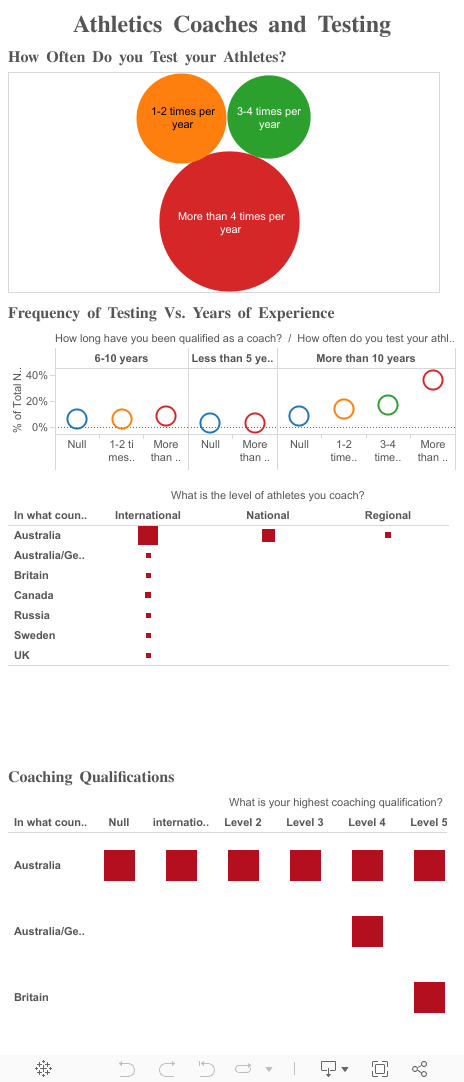
This survey was designed to collect data on how Italian Athletics coaches see various aspects of coaching as well as how they find information/learn and develop their knowledge. The data collection in Italy was completed last year. I would like to experiment the survey with coaches around the World and want to make sure everyone can see the outcomes as data come in. For this reasons, I have designed a simple dashboard with Tableau which is linked to the google spreadsheet and updates itself as soon as somebody fills in the questionnaire.

The questionnaire is available here. If you are a coach in Athletics, make sure you fill it in and if you have colleagues/friends interested, pass them the link.

You can also fill it in from this page

In the meantime, some data are available here:
Athletics Coaches and Testing

New Article Published

This paper was the result of a collaboration with the University of South Wales and part of Dr. Brian Cunniffe’s PhD work. A unique study looking elite rugby players in the real world of competitive sport. Just like every study some limitations but a good chance to look at what happens away from the laboratories.

‘Home Vs Away’ Competition: Effect on Psychophysiological Variables in Elite Rugby Union 

Section: Original Investigation
Authors: Brian Cunniffe1,2, Kevin A Morgan3, Julien S Baker, Marco Cardinale1,5, and Bruce Davies 3
Affiliations: 1Institute of Sport Exercise and Health, University College London, UK. 2English Institute of Sport, Bisham Abbey National Sports Centre, Marlow, UK. 3Dept. Sport, Health and Exercise Science, University of South Wales, Pontypridd, Wales, UK. 4Division, Sport and Exercise Science, University of the West of Scotland, Hamilton, Scotland, UK. 5Aspire Academy, Doha, Qatar.
Acceptance Date: April 28, 2015
Abstract
This study evaluated the effect of game venue and starting status on pre-competitive psychophysiological measures in elite rugby union. Saliva samples were taken from  players (starting XV, n = 15  + non-starters; n = 9) on a control day and 90 min prior to 4 games played consecutively at home and away venues against local rivals (LR) and league-leaders (LL). Pre-competition psychological states were assessed using the Competitive State Anxiety Inventory-2. The squad recorded two wins (home) and two losses (away) over the study period. Calculated effect sizes (ES) showed higher pregame cortisol (C) and testosterone (T) difference values before all games compared to a baseline control day (ES: 0.7 to 1.5). Similar findings were observed for cognitive and somatic anxiety. Small between venue C differences were observed in starting XV players (ES: 0.2 to 0.25). Conversely, lower ‘home’ T (ES: 0.95) and higher ‘away’ C (ES: 0.6) difference values were observed in non-starters. Lower T difference values were apparent in non-starters (vs. starting XV) before ‘home’ games providing evidence of a between group effect (ES: 0.92). Findings show an anticipatory rise in psychophysiological variables prior to competition. Knowledge of starting-status appears a moderating factor in the magnitude of player endocrine response between home and away game venues.
Keywords: Home advantage; hormones; psychophysiological; cortisol; testosterone; rugby.