
I have been playing with new technology recently and wanted to share some of the experiences. Also, I have been looking at the usual issue of visualising data from multiple sources and identified few open sources/free resources which may be of interest for people training for specific events and/or coaches trying to look for solutions to help their athletes.
Let’s talk about technology first. I was able to try a continuous glucose monitor (CGM) few months ago and I found the experience very interesting and helpful in modifying some nutritional habits.
Thanks to https://www.veristable.com I received a free CGM and was able to use the VERI app to track my sugar levels for 14 days. [Disclaimer: I am not involved with a company and I have already disclosed I received the sensor and app for free as a trial user].
What is a CGM?
A continuous glucose monitoring system, or CGM for short, is a small device that continuously monitors your glucose levels in almost real time.
To use a CGM, you need to insert a small sensor the size of a coin, in your arm. The sensor has a tiny cannula penetrating the top layer of skin that is able to sample glucose concentration. An adhesive patch holds the sensor in place, allowing it to take glucose readings in the interstitial fluid (the fluid that surrounds cells in the body) throughout the day and night.
A small transmitter connected to the sensor allows the system to send real-time readings wirelessly to a mobile phone to display and record your blood glucose data. Some systems come with a dedicated monitor, and some now display the information via a smartphone app.
If you want to see how you can wear such a technology, see the video below.
I did wear the sensor on my left arm.
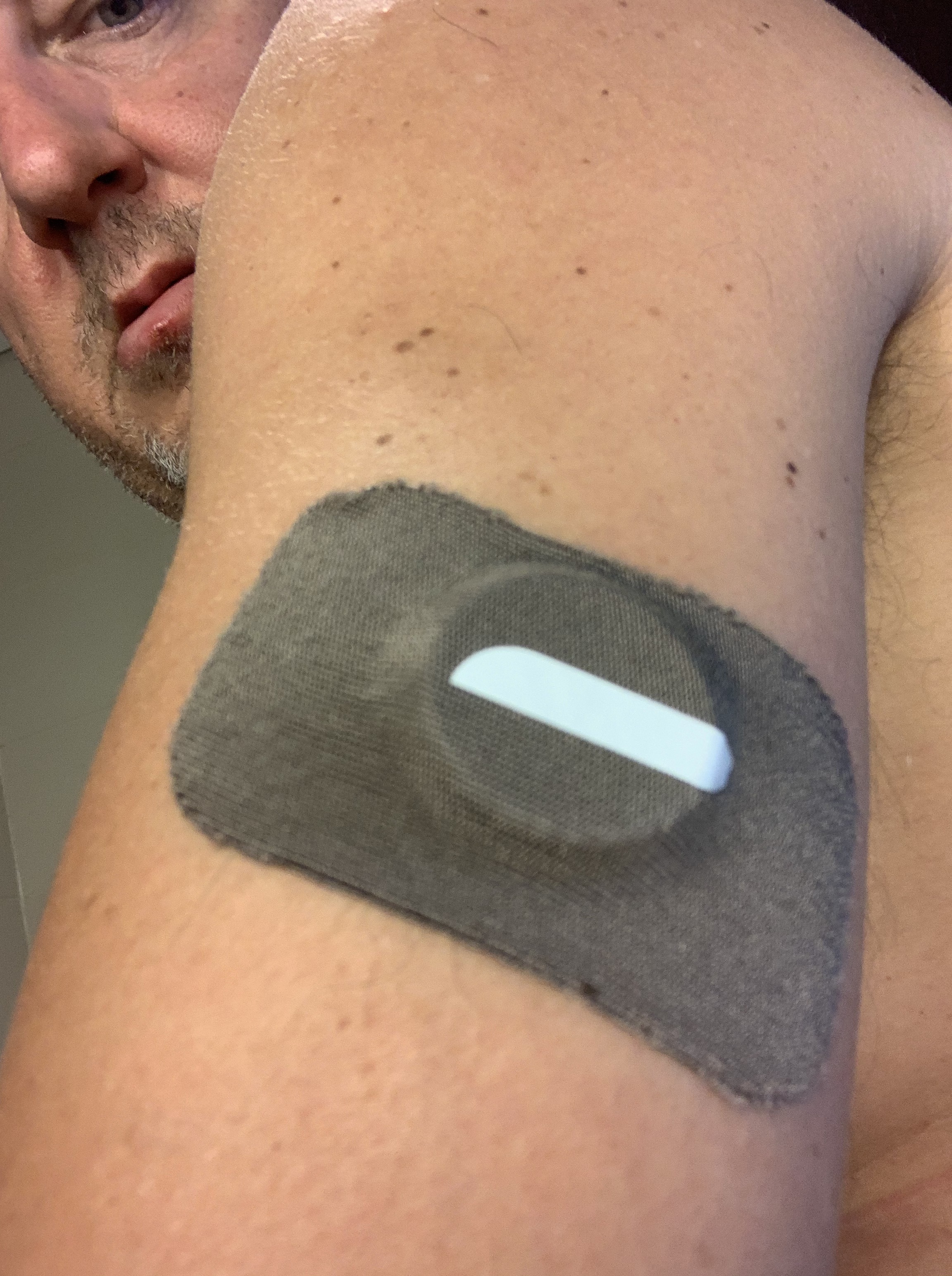
The app works really well and to sync data you just need to get your phone close to the sensor to download the data. I managed to use it while swimming (with a wetsuit since it was winter here, so the sensor was covered but it is water resistant), running, biking and/or in the gym when lockdown rules allowed.
Here are a few examples of how my glucose levels change with food
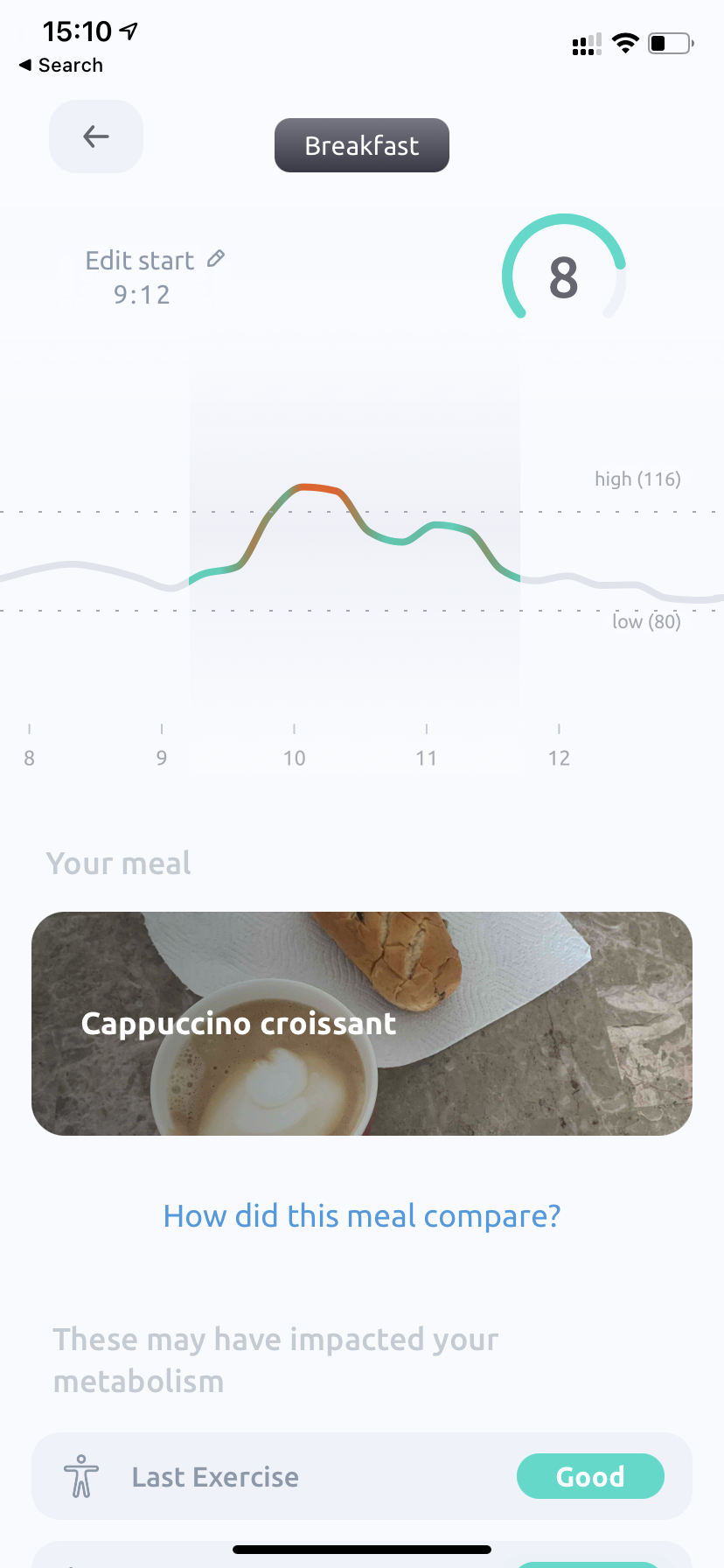

I analysed a lot of food choices and also checked my levels on long rides playing a bit with my on bike nutrition. This is definitively a useful tool even if you are not diabetic if you are training for an endurance event and want to know more about optimising your nutrition, in particular in between training sessions or on long rides/runs.
If you want to read some science about it, this paper on CGM measurements during Ultramarathon is definitively a must read as well as this paper on CGM measurements and individual responses in exercise-induced hypoglycaemia.
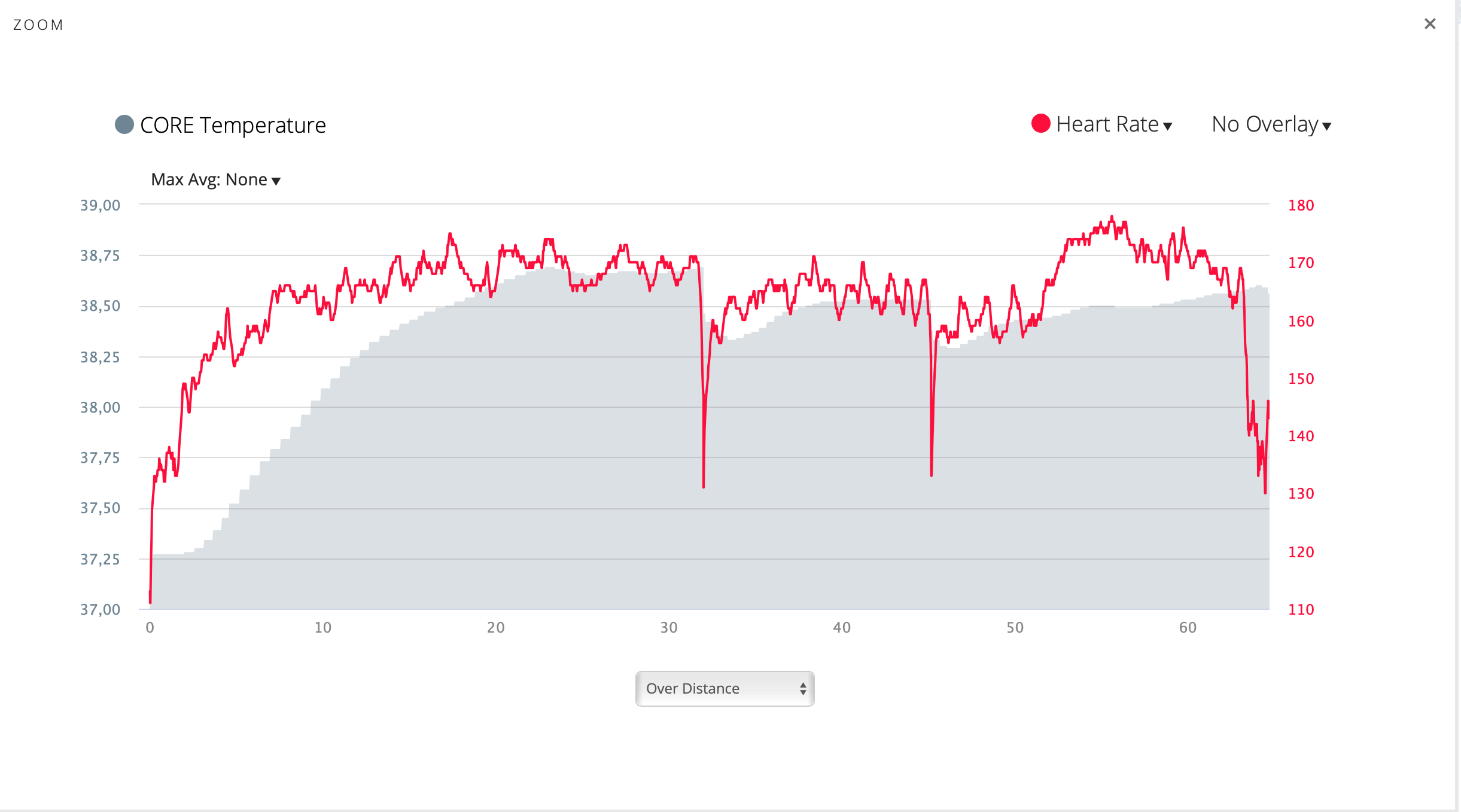
Being exposed to the heat while training here in Qatar quite a lot, I also bought a Core Body Temperature Monitor. This is a thermal energy transfer sensor (details here https://corebodytemp.com/blogs/news/the-technology-behind-core-thermal-energy-transfer-sensors). I can see the data in real time on my Garmin bike computer or Garmin Fenix watch and it helps me with managing how I am coping in the heat (I don’t do well in the heat…). The kit was reviewed by DC Rainmaker before (link here so you can read the details), validation studies not there yet (here are links to the validation page of the company) and I plan to take a core temp pill to check it out in the next few weeks. It looks promising, however I would really like to see how it behaves with temperature change, also, quite expensive, but if accurate enough, it may be a good gauge on hot days.
Here is what happens on a 65Km ride in the heat with two water/cooling breaks (temperature reached 38degrees Celsius that day!).
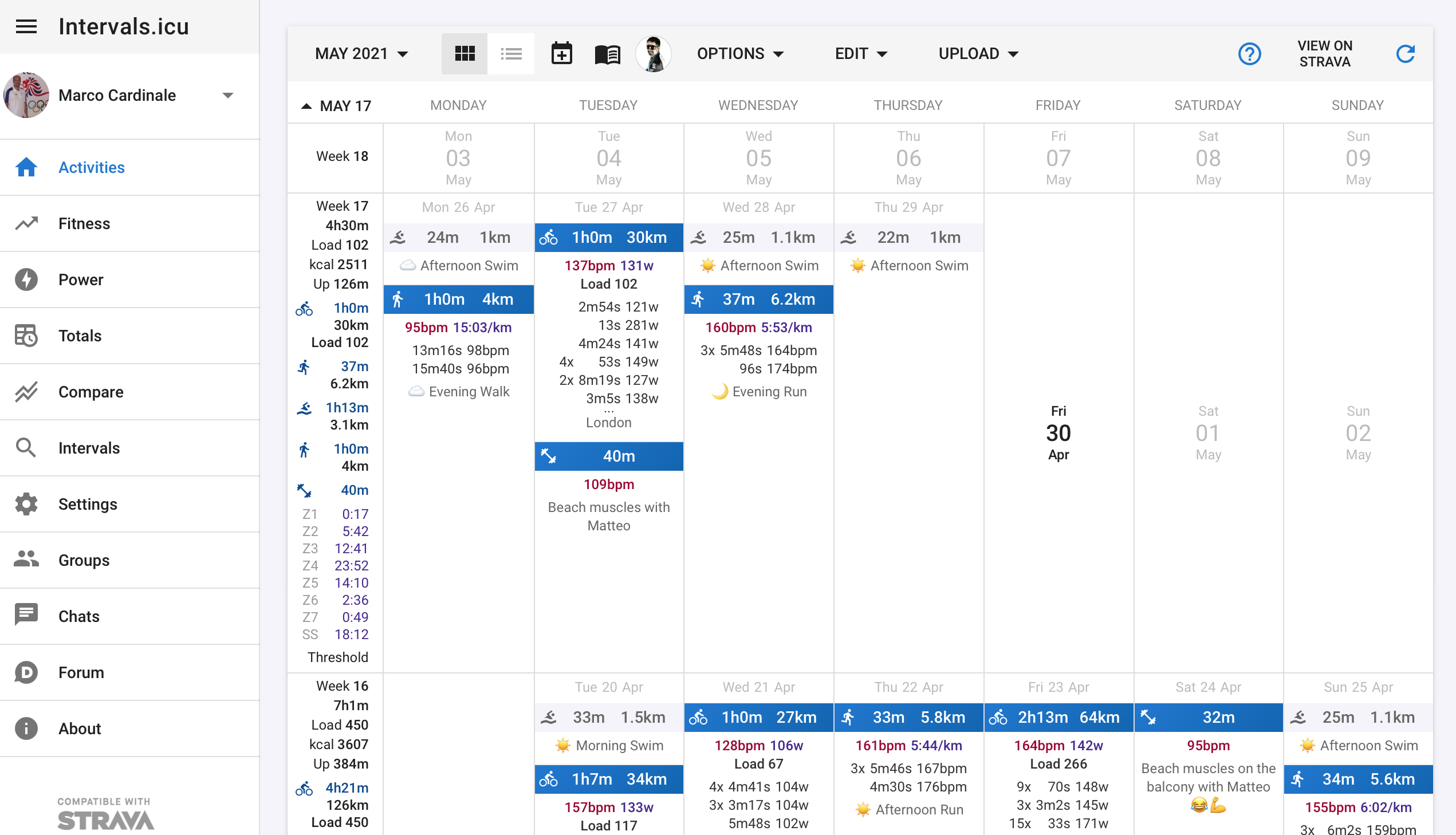
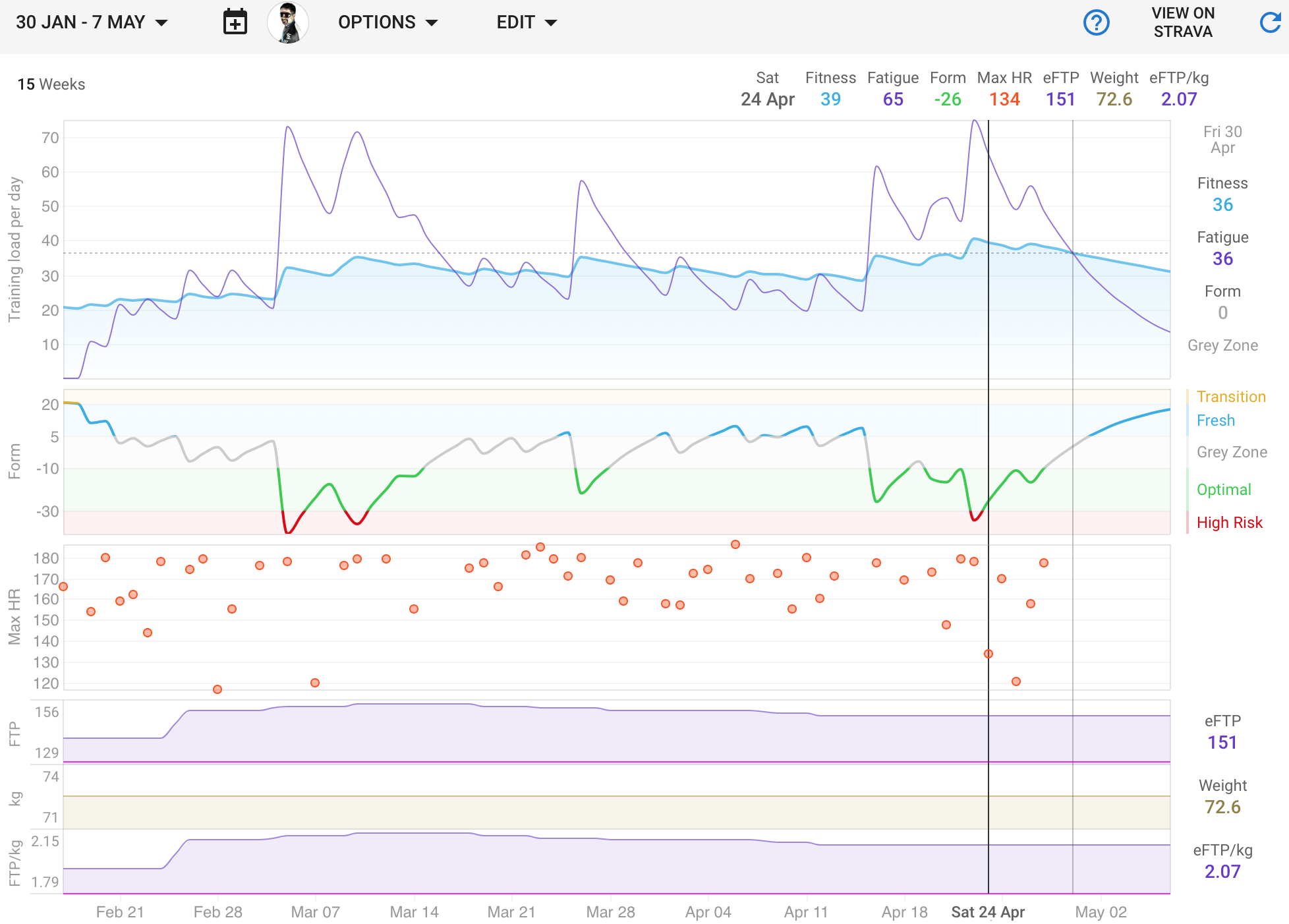
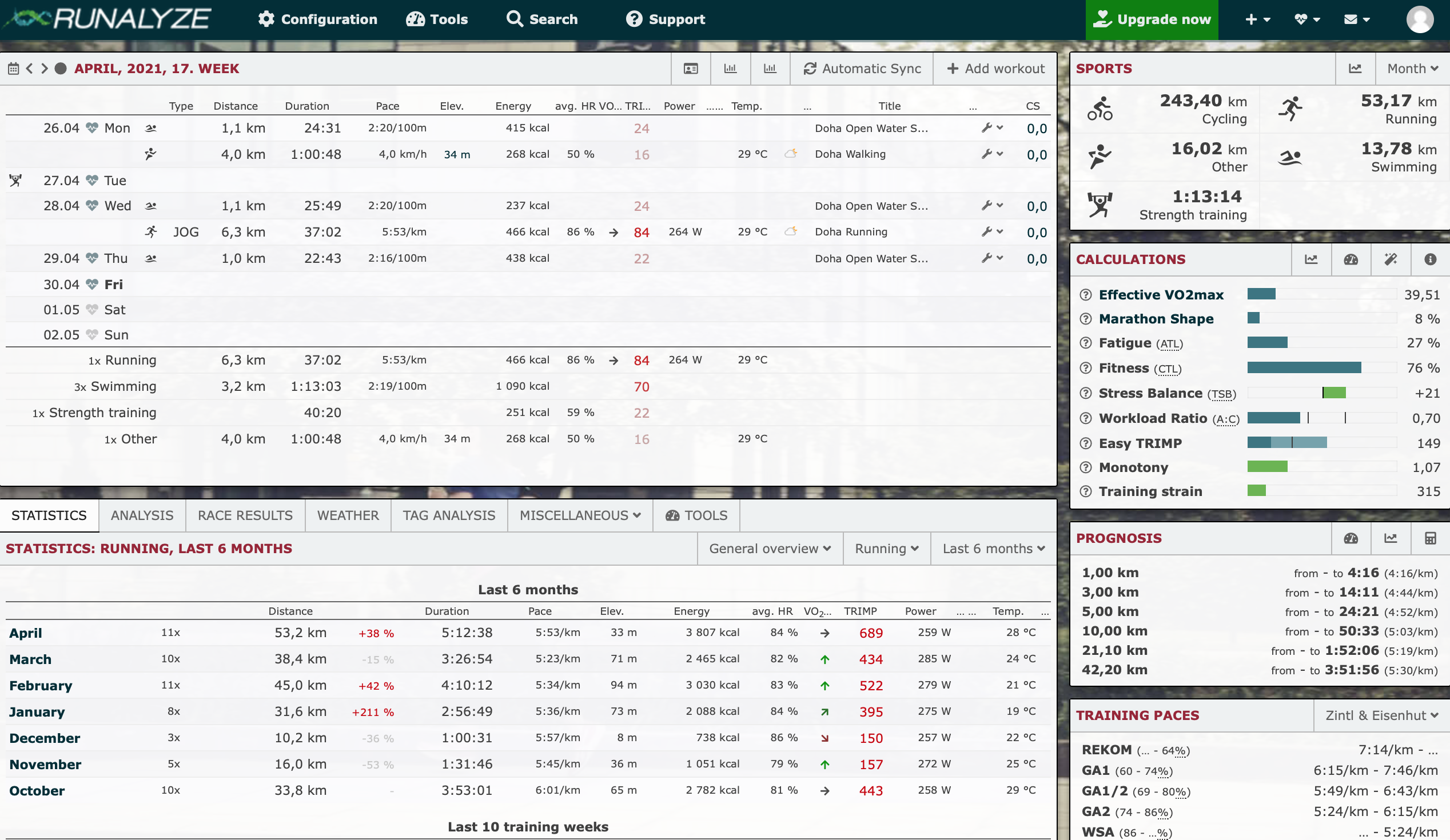
Finally, I have been looking at dashboard software solutions mostly to better visualise my data but also to look at options for remote monitoring of athletes.
The first is Intervals.ICU which integrates very well with Strava.
The other one is Runalyze, which I am using to look at my running activities. This dashboard/analytical tool offers some prognostic options (but as usual, not sure how good they are, will need more time and more running to really evaluate it, so wish me to stay injury free as long as possible to test it).
I have been playing with a few more, I will share them in my next post.
Stay tuned.
 Sports & Fitness Science
You must be logged in to post a comment.